Every full-time RVer remembers their first major dumping station failure. When you live on the road, your waste management setup is not an afterthought but a primary mechanical system that requires robust hardware. We spent our first season testing budget kit hoses against commercial-grade polyolefin hoses across four climate zones to see which components withstand constant UV exposure and rough gravel pads.
Choosing Heavy Duty Bayonet Fittings That Never Leak
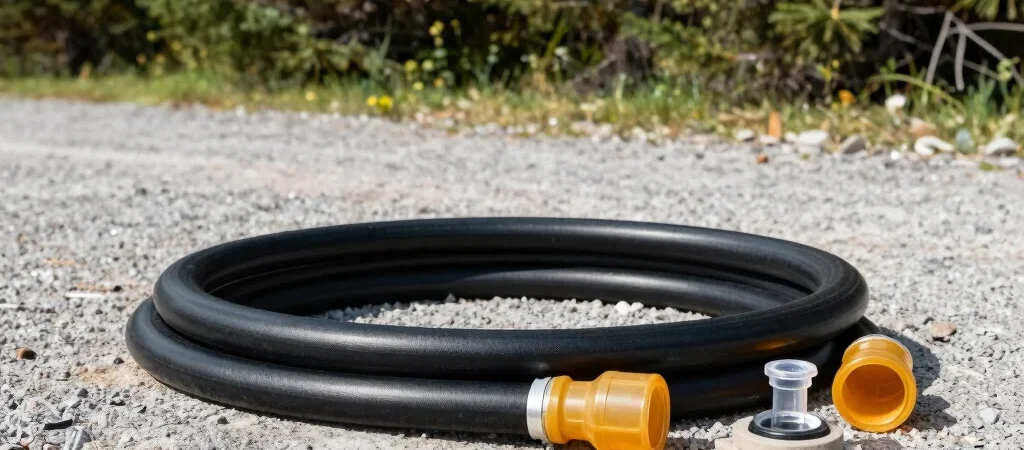
Flimsy plastic tabs wear down quickly after repeated connections to campground dump station collars. Look for four-prong bayonet fittings molded from high-density nylon with pre-installed silicone gaskets rather than standard rubber rings. A swivel fitting on both ends is essential because it prevents severe hose twisting while locking down the connection.
Hose Thickness and Sun Damage Protection
Standard ten-mil vinyl hoses disintegrate fast under intense sun in places like Arizona or Florida. Upgrading to twenty-six-mil polyolefin reinforced with steel wire ensures the line remains puncture-resistant when dragged across coarse gravel. As an Amazon Associate, we earn from qualifying purchases when you select field-tested gear through our reviewed links, which helps us keep our campsite guides free and accurate.
Storage Solutions for Clean and Fast Breakdowns
Storing contaminated hoses alongside clean freshwater gear is a cardinal sin of rig organization. Dedicated bumper caps with ventilation holes or under-chassis PVC tube carriers keep your dump gear isolated and dry. End caps that seal off both ends of the hose before storage will save your pass-through storage bay from unexpected leaks.